
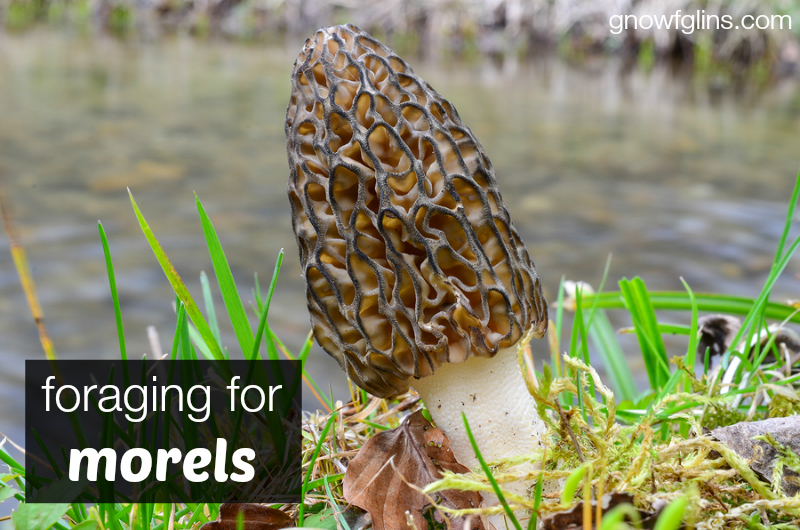
Although we may still see a frost or two, spring has finally sprung here in northern Idaho. Our most favorite thing to do this time of year is forage for morel mushrooms!
I’m thrilled to share our morel excitement with you (and I hope it’s contagious) plus give you ideas for eating and preserving morels — but let’s get two items of caution out of the way first. 🙂
Two Warnings
First, I am not trying to scare you off foraging but rather to make sure you’re aware of the vital importance of proper identification!
Many plants and mushrooms have an “evil twin” — a look-alike that’s either toxic, poisonous or deadly. So it’s very important to forage with care and knowledge, and to be absolutely sure in your identification. You can do this through informative books or perhaps online or local classes. However, my best recommendation is to begin foraging with someone knowledgeable. No matter what, you want to be absolutely certain you’re finding the benevolent (the right) version of each plant.
And second, be sure to forage edibles away from roadways. Often, sprays or toxins are used on roadways and these may also land on the wild plants nearby. Stearing clear of these traffic areas will net you fresh, pure, and healthy wild edibles.
And with those warnings out of the way, a wonderful bounty awaits!
The Joy of the Hunt
Not only do we get to feast on tasty morels at the end of the day, we also enjoy the hunt — very much. It’s addicting and our eyes actually get sore focusing on the forest floor. Who wants to leave even one behind? On a good day, a little friendly family competition inevitably develops — to see who can get the most.
The “Steak of the Wild”
Have you hunted or tasted morels? If not, you’ve been missing out on something truly amazing.
Finding morels is like finding gold. We nicknamed them “Steak of the Wild”.
Although their unique webbing makes them look fragile, once seasoned with homemade seasoning salt and garlic powder and fried in some butter or coconut oil, you get a hearty bite with intense flavor. Fried morels create a lot of their own juice. I drain the excess juices out of the skillet and fry them for a few more minutes — to crisp them up.
(Similarly, this is how Wardee fries foraged chanterelle mushrooms.)
Making Time
Morels are available for such a short time each year, so no matter how busy we may be, we prioritize at least one or two full days out looking for these lovelies! And it’s worth it — not only are they tasty, but they’re nutritious, too. Morels offer vitamin D, iron and B vitamins. And don’t forget about the great exercise you get while hunting them!
Preserving Morels
If you are fortunate enough to find morels in abundance, they can be preserved through freezing, dehydrating, and drying. Unfortunately, canning is not an option and here’s why.
When cooking morel mushrooms, they release toxic hydrozines into the air, which disperses them. But if canned, these toxins would remain in the jar and go back into the mushrooms, creating a form of botulism. A poundage or temperature has not yet been found that would eliminate this problem — so it is highly recommended NOT to can morel mushrooms.
Freezing
We have never foraged enough at one time that we were left with extras, but friends have and this is how they freeze the excess.
Clean the morels, slice them in half from top to bottom and roll in flour. Then place them in a freezer bag or freezer container. (Or they can be placed on a cookie sheet to freeze individually on a cookie sheet first.) The flour keeps them from sticking together.
Our same friends also recommend dipping the sliced morels in egg, then rolling in flour, and frying them in a skillet with coconut oil or butter and seasonings. Once cooked, remove from the skillet and cool. Then put in a freezer container or bag to freeze. These are easy to reheat and enjoy.
(This is similar to how Wardee preserves chanterelle mushrooms.)
Dehydrating and Drying
You could string morels by the stem for easy drying — or place in your dehydrator or solar oven for easy dehydrating.
Rehydrating Morels
Here’s my recommendation for rehydrating. Place the mushrooms in half and half or milk of your choice. Once rehydrated, fry the morels in a skillet with coconut oil or butter (save the milk) and season with salt, pepper, and garlic. Instead of straining the excess liquid in the skillet, I would suggest keeping it for flavoring. Also, now add back the milk used for soaking and make a creamy sauce with your favorite thickener (flour, arrowroot, etc.).
Have you foraged morels? Please share your tips on how to eat them or preserve them! What else do you forage in spring?
...without giving up the foods you love or spending all day in the kitchen!

2 free books:
Eat God's Way
Ditch the Standard American Diet, get healthier & happier, and save money on groceries...
We only recommend products and services we wholeheartedly endorse. This post may contain special links through which we earn a small commission if you make a purchase (though your price is the same).


Ok. I’ve hunted morels all my life with my family. I noticed in your photo of a bunch of mushrooms, the type we always avoided. The one on the very bottom and the very right. They have a cap that doesn’t attach to the stem. Anyway, I avoid them cause my family always had, but not sure if there was a real reason. Have you found that fungus to be ok? Is it a morel? Should I be picking these fun guys?
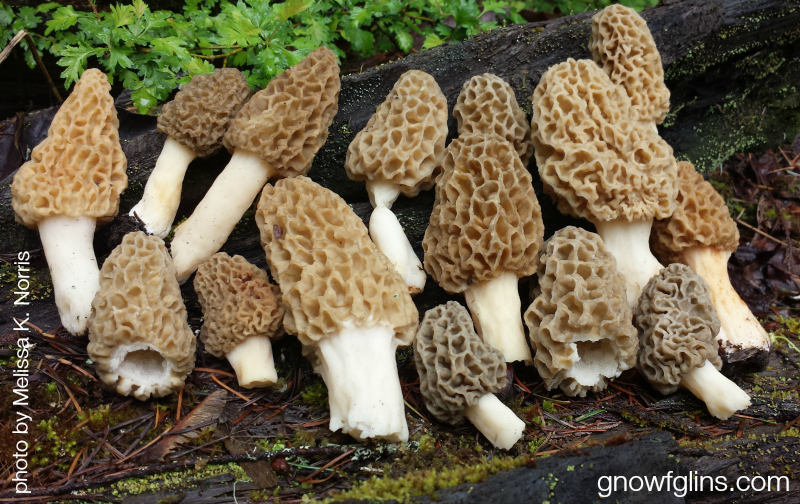
Cassie, we actually took that photo down and replaced it with one that contains only morels (the 2nd photo in the post). To be honest, we weren’t sure if the other mushroom was safe to eat or not and didn’t want to confuse anyone else.
The new photo there is from another writer, Melissa, and it shows only morels.
I enjoyed morels much of my childhood! I love these! My sister saw them for sale at the farmer’s market last weekend. They cost about $40 a pound! I couldn’t believe they were that expensive! These are the only mushrooms that I truly enjoy. Fun fact — we grew up calling them dry land fish. 🙂
Good Morning Melissa, Thanks so much for sharing. Yes I have heard previously that morels sell very high when available on the market and I can totally understand why. It is hard to find them in abundance and when you do it becomes a commodity. Honestly, to me they are way more valuable for eating. I would never sell them.. 🙂 Ok… I have to ask – why did you call them dry land fish? Blessings….
Just a note on harvesting: the mushrooms should not be pulled out of the ground, but cut off with a knife. Also, they are prone to worms as they age so a saltwater soak will help with that little problem!
Good Morning Shelley,
Thanks for sharing… I have heard varied thoughts on harvesting in regard to leaving the stem in or pulling it out. Our bigger concern is getting the spores from the mushroom back on the ground so they can reproduce in that area again. So once we pull them we tap them off where we stand to remove the spores. We haven’t seen worms in our area, but the ants LOVE them and the salt water soak will certainly do the trick… Thanks so much for taking the time to read and comment.
Blessings to you and yours!
I live in Alabama, I look for morels early in the spring.I usually find one to five morels a year they are small. I usually find them at the edge of my yard around flowers. I’ve looked and looked other places no luck. Any help for me where can I find them? Or is N.Alabama a place where they don’t grow well?
Good Morning Joan,
Thank you for taking the time to read and comment. They can be tricky to find. Out here they are typically in a more shaded areas amongst the pines and often in the mosses, but we also find them in non-typical spots too in the sun. They seem to like the edge of the woods as well. It can also vary dependent on the winter season that you may have had. But keep your eyes peeled and look everywhere for them. Last year we got a lot of them and this year we got very few so I believe there are a lot of variables, but if you are finding them they are there. Good luck hunting and thank you again.
Blessings to you and yours!
We live in Pendleton Oregon and have done first round of foraging for morels this year. My husband and his friend came back with 13 pounds yesterday and am really excited to start playing around with recipes. Thanks for information on drying. He also found a couple of calf brain mushrooms and wild cauliflower. There are so many plants and herbs to forage out on the mountains around here. It’s great.
Okay so I can’t help myself …..first off these are the best ever!!! That said here is what I have learned over years of hunting these guys…first the gray ones prefer pines….the regular yellowish brown are found in old orchards (apple mostly) And my grandma use to soak hers in salt water but before that she rinsed them and threw the water out back…they will spring up where you dump out the water(rinsing the shrooms)….that is prior to the slat water,,,have a good one folks!!!
What about vacuum sealing with mason jars? Would that be an option? I know a lot of families try to reduce their plastic use and when freezing most use a vacuum seal machine.
When you can mushrooms, you cook them PRIOR to the canning process typically by boiling so any “toxins” that you would worry about would be released in the initial cooking process and NOT during canning.