
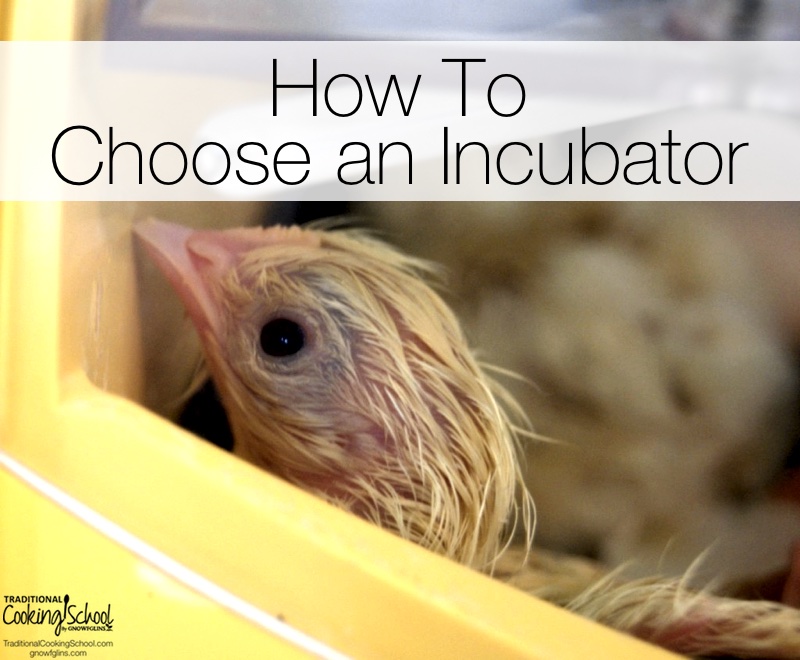
My interest in chickens has grown ever since we started our flock two years ago with eight Rhode Island Red pullets.
I am fascinated by some of the rarer heritage breeds and recently told my husband that I would love to start raising them in an effort to preserve and promote interest in them. His response? The gift of an incubator so I could hatch my own chicks.
Why use an incubator instead of allowing chicks to hatch naturally? In our case, the reason was threefold:
1. Limited number of birds.
For our tenth anniversary my husband gave me a straight run flock of Lavender Orpingtons. As luck would have it, all but one were roosters. We are now down to one rooster and the one pullet: meet Kedrick and Violet. When she is old enough, I will allow Violet to go broody, but not until I have collected enough of her eggs to hatch myself. This will hopefully help her out and increase the flock much more quickly.
2. Our meat birds do not reportedly go broody.
We selected a dual purpose heritage breed (Bresse) that performs beautifully when putting meat on the table. They do not, however, go broody. If we want the flock to increase, we’ll need to hatch them ourselves.
3. We don’t currently have a surrogate mom who can do the job.
Breeds such as Cochins make great mothers, even standing in for other birds who are not interested in raising their own young. This is something I am looking at possibly doing in the future, but at present do not have the resources (additional coop space, feed, a bird).
Hatching Chicks with an Incubator
If you are interested in purchasing an incubator in order to hatch out your own chicks, here are a few things we learned, and a few things you might want to consider.
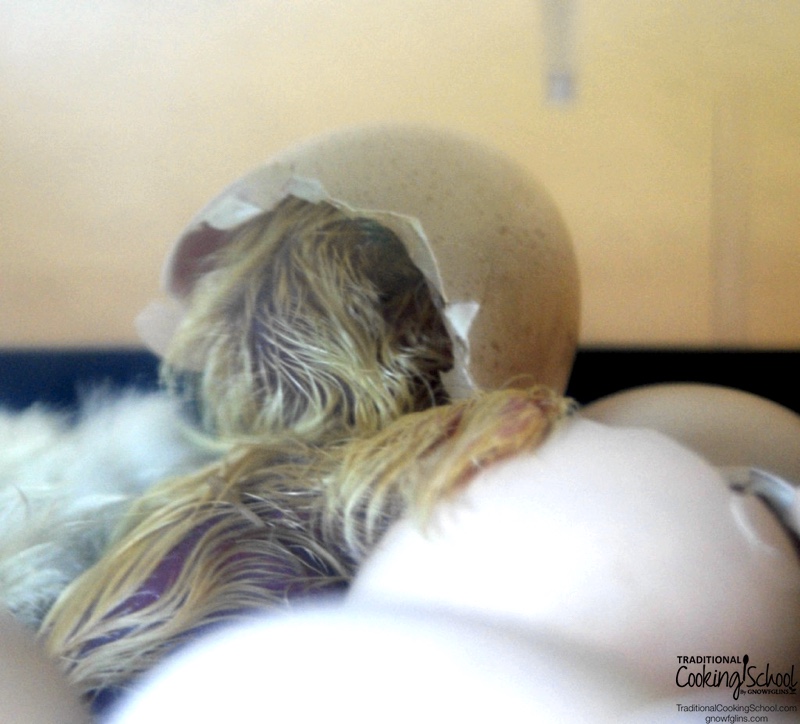
Keep in mind that not all of your eggs will hatch. A hatch rate of 85% is very good. If you order eggs through the mail, you can expect about 50%. Hatch rates are also dependent upon the quality of your incubator, and your skill as a surrogate chick mom. For our first hatch we ordered one dozen fertile eggs off of ebay. Eight of them hatched, survived, and thrived. As a newbie “feather mom” I attributed our unexpected success to the quality of our incubator.
As you shop around, consider what exactly you want to accomplish. Incubators come in a variety of sizes, accommodating as few as six eggs to as many as 200. Why do you want to hatch chicks? What is your purpose? Are you simply wanting to provide a valuable learning experience for your children? If so, you may want a smaller size, saving yourself expense and considerable labor once the eggs hatch.
Or, like us, do you want to slowly supplement a growing flock of laying hens and meat birds? Then you’ll definitely need to hatch more than six eggs, but 200 is still way too many. We chose this model, which will hatch up to 24 large chicken eggs.
On the other hand, do you want to significantly increase the size of your flock, perhaps to sell birds or eggs as a part of your homestead business? A larger size might be more suitable. If you are new to hatching however, I still recommend starting small, as the skill and know-how to achieve best results comes with experience.
Once you have settled on size, here are some features to consider.
Material
The majority that we looked at were either comprised of Styrofoam or plastic. Styrofoam is definitely the less expensive of the two, but after consulting Storey’s Guide to Raising Chickens, the author reported that when using her Styrofoam incubator her hatch rate decreased with each successive hatch. It was also difficult to clean. For that reason, we decided to go with plastic. I can say from experience that clean up, once our eggs hatched, was a breeze.
Space
Large incubators are in the style of a free-standing cabinet while tabletop models are just that — small models that fit on top of a table. I still found that some of the large ones looked rather “clunky” and since space is an issue, we opted for one that was compact and could easily fit on top of a bookcase in the office.
Convenience
Artificially hatched eggs need to be turned on a regular basis. Turning simulates the mother’s movement in the nest and keeps the yolk properly centered within the white of the egg. If your incubator does not have an automatic turning device, you need to be around to manually turn the eggs at least three times a day. Since this was something I just couldn’t commit to, we opted to pay the extra expense and get an auto turn cradle. Our model offers a slow, steady, continuous rocking motion powered by a relatively quiet motor.
Airflow
An incubator needs good airflow to replenish oxygen and replace the carbon dioxide for your growing embryos. Most have a small fan of some sort, but make sure the fan is secure and protected so it won’t crack the eggs or injure newly hatched chicks.
Temperature Control
Consistent temperature is important for a successful hatch rate and healthy chicks. Make sure your thermometer is easy to read and within easy access in case it needs to be adjusted.
Humidity Control and Hygrometer
Humidity is another very important factor. In order for the eggs to hatch properly and for healthy chicks to emerge, moisture must evaporate at the correct rate. Every incubator has some sort of ventilation system to control humidity. Make sure you know how to use yours.
Initially I thought that we needed a hygrometer, since humidity is so important for hatching and healthy chicks. My husband, however, advised me to keep it simple. I’m glad I listened. Our incubator is equipped with two small wells underneath the egg basket, so we just made sure that the water was always at the level instructed by the manufacturer. During the hatch itself, when humidity is increased, we adjusted the vents accordingly. Even though I sweated it a few times during the incubation period and hatching, in the end, everything was fine.
Egg Candler
I actually insisted that we needed an egg candler, even though my husband again suggested that we’d be fine without it. He was right, once again. 😉 A small flashlight would have worked just as well, and we decided to candle the eggs only once during the incubation period.
Do you hatch your own eggs? What kind of an incubator do you have? What are some features you find particularly important?
...without giving up the foods you love or spending all day in the kitchen!

2 free books:
Eat God's Way
Ditch the Standard American Diet, get healthier & happier, and save money on groceries...
We only recommend products and services we wholeheartedly endorse. This post may contain special links through which we earn a small commission if you make a purchase (though your price is the same).


I hatched some silikies in an incubator because they are really broody and make great mothers. Because they are small, I then crossed them with my standard breed rooster and got two larger hens that have the broody instinct and can handle more standard size eggs and chicks. I find that my birds that were raised by a broody hen are much better foragers and spend less time at the feeder. The roosters are also more docile and easy to manage.
That is good to know Tami. Do you mind if I ask in what area you live? I have been interested in raising silkies but we have very hot summers and I have been told they can’t take the heat very well.
Thank you for this very helpful article. I have been looking for a source for Lavender Orpingtons. Where did you get yours from as well as the Bresse chickens?
Thank you,
Rachel
Rachel, I found mine locally and bought them off Craigslist. You might try there if you are comfortable with that. Otherwise some of the online hatcheries carry them. My Pet Chicken has some I believe. They are lovely and I’m enjoying mine. The Bresse I ordered off ebay but I have seen local ads for those as well. I would highly recommend them. They were healthy from the get-go, are very hearty, and have a nice temperament. Not as sweet as orpingtons, but they are friendly enough and gentle.
Thank you so very much. I will check into the Craigslist option. Would you mind sharing which ebay seller you got your Bresse eggs from?
Rachel when I went to look just now, they no longer have a store. I know they can be hard to find but they are available here and there. You might just try a google search if Craigslist doesn’t get you any results.
This is the first time I’ve found someone who hatches only when needed, who is taking the simple route ( and a husband with a lot of common sense and practicality) No you have to do this you have to do that, just plain and simple like a hen sitting on a nest. I’ve been hatching/raising heritage breeds for around 10 yrs, mostly those on the endangered list, I have a GQF sportsman, this incubator holds 270 eggs at one time, though I set 90 eggs weekly, so have hatches weekly. Work with the local 4h kids & area families who want to raise birds.
I have Lav orpingtons, Lav Ameracaunas(the pure ones), Booted, d’Uccles, Minorcas, Langshans and others
Oh Paula! It is so nice to “meet” you! How lovely that you can hatch on a weekly basis! I will also be sharing soon about our actual first hatch but it was one of the most beautiful experiences I have ever had. That must be such a fulfilling job for you to be able to share these gorgeous birds with others. My lavender orps are filling out nicely and are so pretty. I can’t wait to hatch some this summer It sounds like you have quite a variety. I would like to eventually do more as we have the time and the space. Thanks for sharing.