
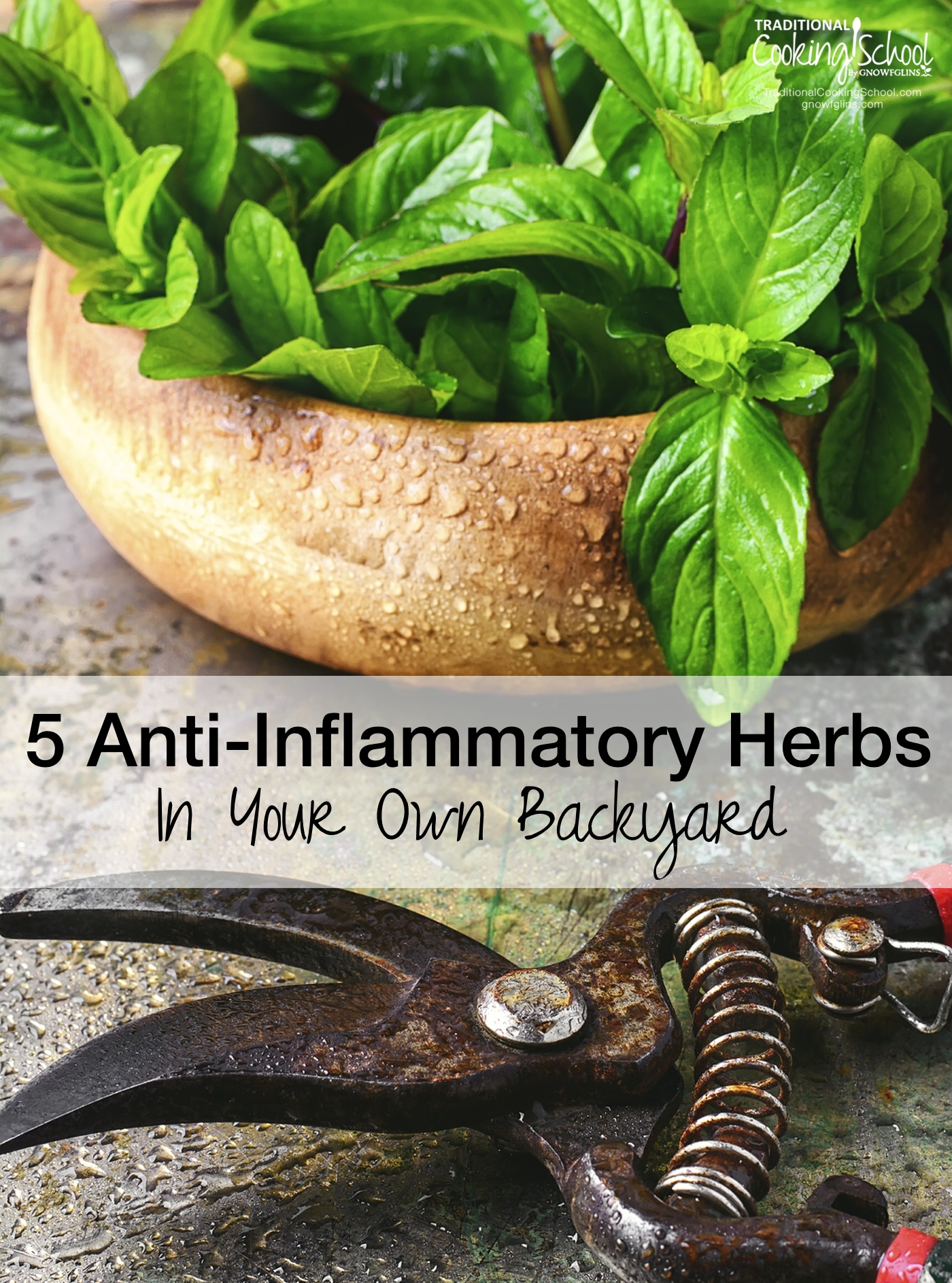
I’m a multi-tasker.
Maybe that’s why I love flower beds that double as herb gardens. They’re pretty and serve a purpose at the same time. They’re ornamental and medicinal.
Anti-Inflammatory Herbs
One of the reasons I love herbs so much is because of their ability to take care of everyday symptoms.
Did you sprain your wrist? Yep, there’s a plant that can help. Need something to soothe the baby’s bug bites? Check — that one’s covered too.
Here are 5 ordinary plants that are anything but ordinary when it comes to relieving inflammation, swelling, and pain.
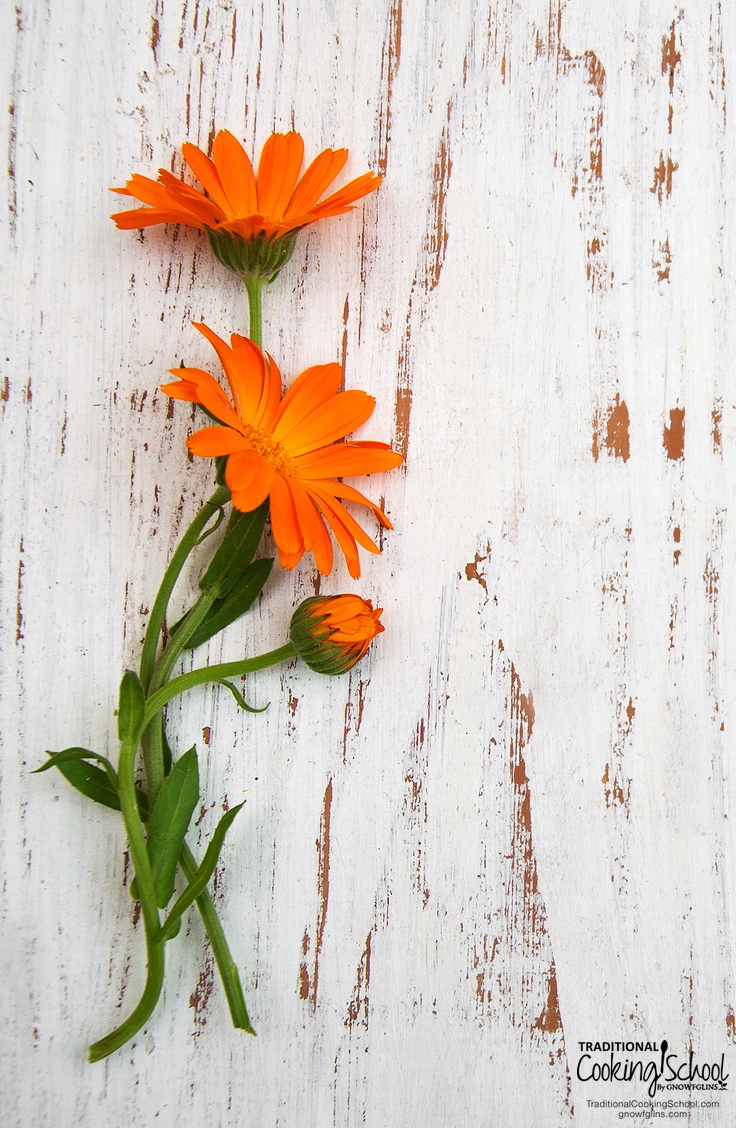
Calendula
Calendula is an annual daisy-like flower that blooms from late spring to fall. (Be careful not to confuse this with the common marigold.) It has been used for many years in Europe and the Americas for a variety of complaints, including inflammation.
The flower head and the petals are used when they are fully open. Harvest them on a dry day, before the hottest hours. Leave some flower heads on the plant to mature and drop seeds for next year’s crop.
You can steep the flower head and petals into a strong tea, or make it into salves and ointments. It can be used both internally and externally.
- DIY Simple Calendula Salve
- Queen of Hungary Water (great addition to bath water for inflammation due to bug bites)
- Easy Calendula Salve
- Calendula Tea
- Multi-Purpose Herbal Healing Ointment
- Calendula Balm
- Herb Infused Oil & Skin Soother Salve
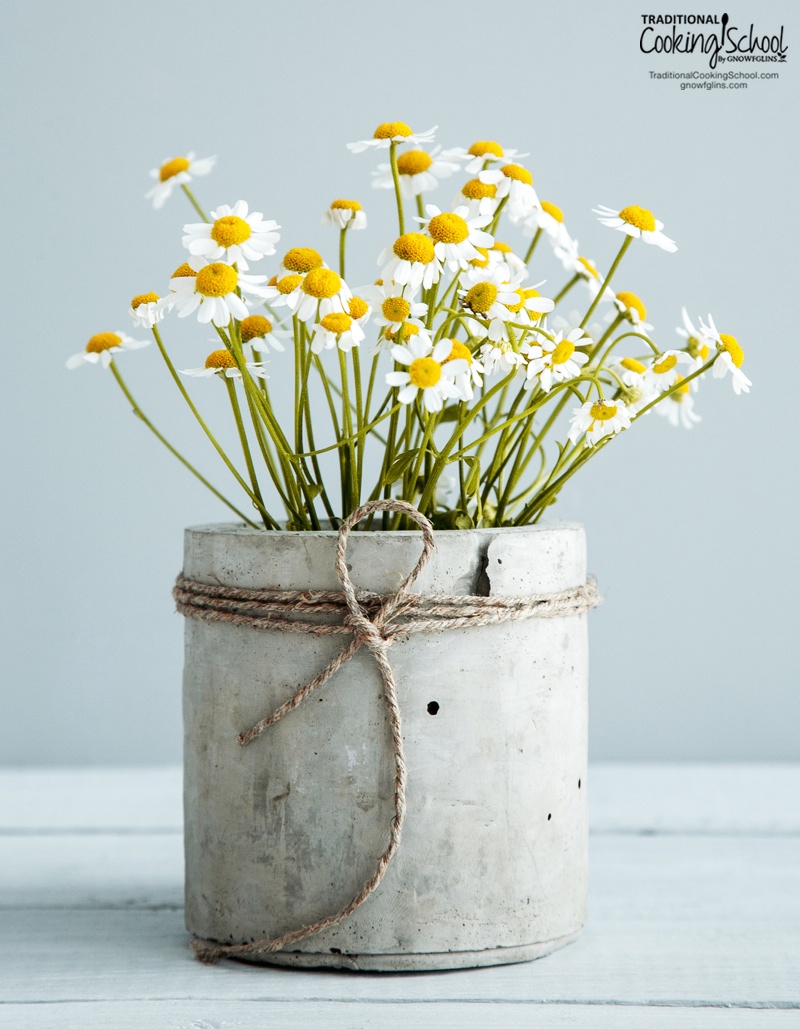
Chamomile
There are two varieties of chamomile: German and Roman. They’re both beneficial for inflammation, but the German variety is more commonly grown in the U.S. It grows as a tall perennial and blooms from May to October, whereas the Roman variety is closer to the ground and grows as an annual.
The use of chamomile’s healing properties goes back to ancient times and is well-documented. The flower head and the petals are both used.
To harvest, pick a dry day when the flower heads are fully opened. Chamomile can be used both internally and externally.
- Chamomile “Sleepy” Tea
- Dry Itchy Skin Salve
- Baby Butt Salve
- Homemade Chamomile Tea
- Chicken Pox Salve
- Herb Infused Oil & Skin Soother Salve
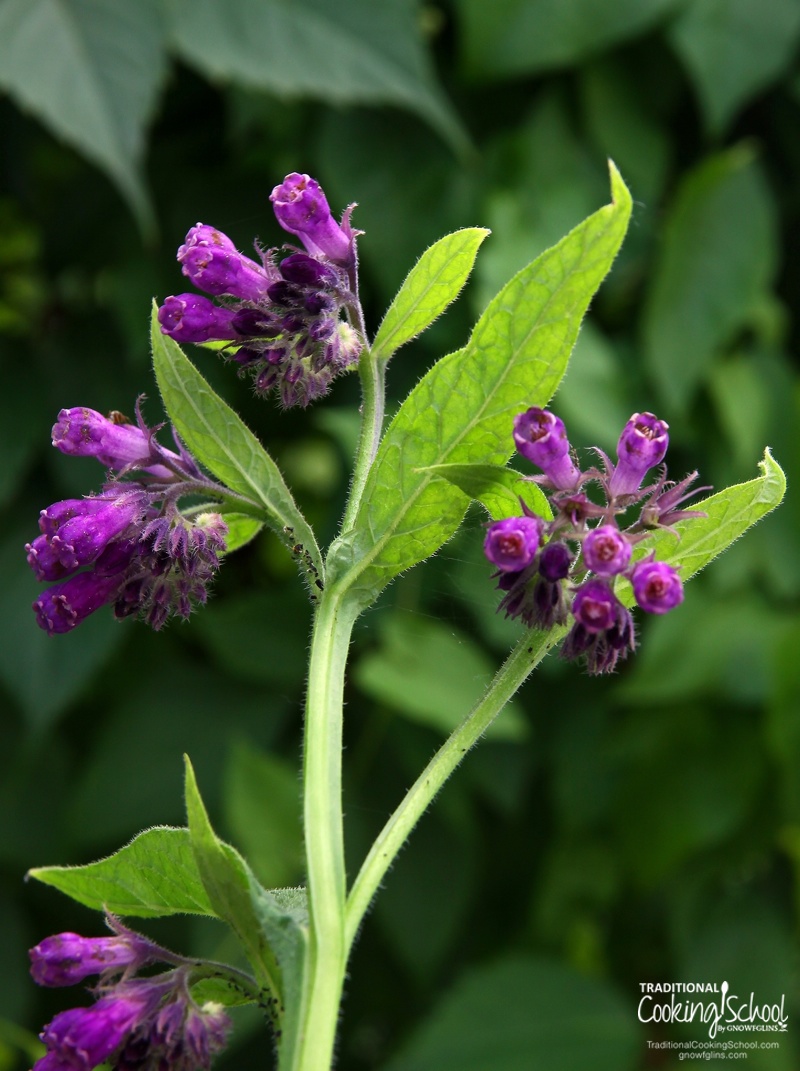
Comfrey
Comfrey is a very easy-to-grow perennial that can be difficult, if not almost impossible, to eradicate. Choose your planting site carefully!
The leaves are broad, hairy, and my kids always say they feel like a cat tongue.
Comfrey is also called boneset or knitbone because in ancient times it was known as a speedy remedy for knitting together wounds and broken bones. It’s a time-honored treatment for healing sores and bruises. It also encourages new skin growth.
Gather the leaves any time of the day and let them dry in the shade. You can also use the roots by digging them up in the spring or fall, and drying them at temperatures between 120 and 145 degrees Fahrenheit. There is controversy as to whether or not to use it internally, so you may want to begin with recipes like these instead:
- 3-Ingredient Shaving Gel (healing for the skin)
- Simple Herbal Muscle Rub
- Frozen Comfrey Pads (great for post-partum!)
- Queen of Hungary Water (great addition to bath water for inflammation due to bug bites)
- Multi-Purpose Herbal Healing Ointment
- Herb Infused Oil & Skin Soother Salve
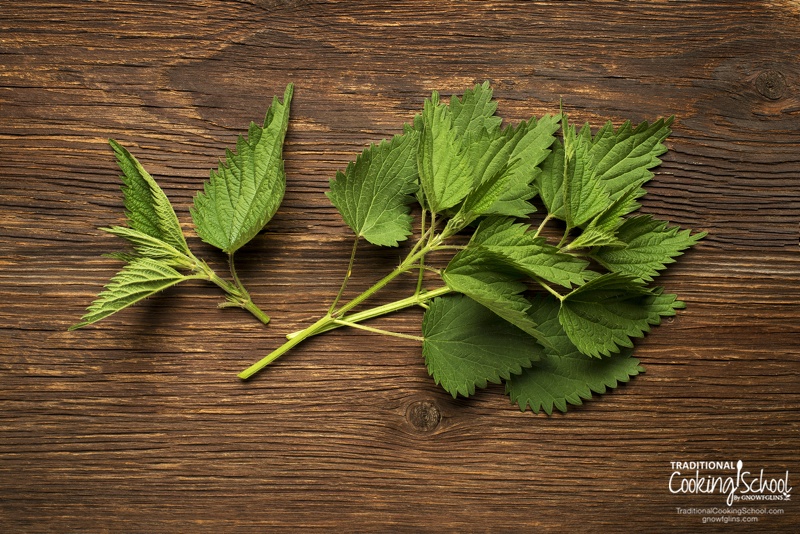
Stinging Nettle
Stinging nettle is one of my favorite anti-inflammatory herbs. It’s tall and green with razor-edge loping leaves. If you’re in doubt as to whether or not it’s stinging nettle, a brush of your hand is all it takes to know for sure.
Nettle has many medicinal uses that elevate it from a hated weed to a heralded tonic. It cures maladies ranging from arthritis and rheumatism to post-partum hemorrhaging. It’s said that when taken orally, nettle shows signs of interfering with the body’s production of inflammation-causing chemicals.
For medicinal use, it’s best to collect the leaves when the flowers are in full bloom and then hung upside down to dry. Drying or cooking nettle destroys the juice in the stinging hairs, which give it its name. If you want to eat nettle, the young plants are recommended.
Stinging nettle can be used internally and externally. It makes a very healthy and nutritious, easily digestible vegetable.
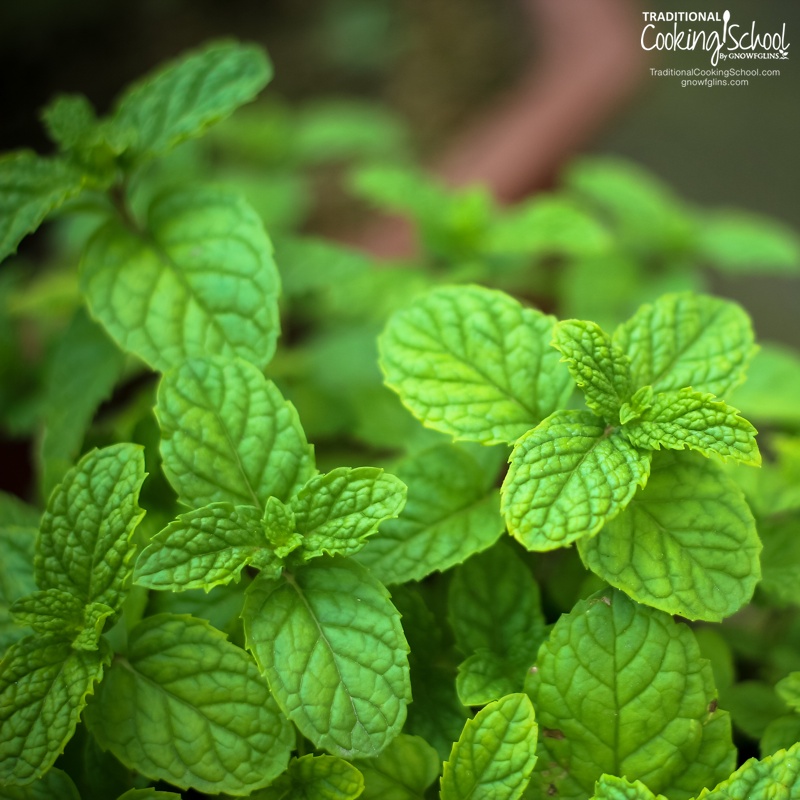
Peppermint
Peppermint is a hardy perennial spreads quickly and grows in a bush-like structure. Breaking off a leaf and chewing it will give a menthol-like coolness and flavor. Like the other members of the mint family, it’s among the oldest and most reliable herbal remedies, particularly for digestion but also for inflammation.
Harvest peppermint before it flowers and let the branches hang to dry in the shade.
Drop a few fresh leaves in a cup of hot water to steep into a lovely mint tea. Peppermint essential oil is one of the few that is safe to take internally and externally. The saying goes that when you carry a bottle of peppermint oil, you’re carrying a “medicine cabinet in your pocket”.
The anti-inflammatory herbs listed here are useful for so many things — inflammation is just one of their healing benefits, and there are even more herbs and plants that help with inflammation!
What are your favorite plants that help with inflammation? Do you have any anti-inflammatory herbs in your backyard?
Sources: Practical Herbalism, University of Maryland, NCBI
We only recommend products and services we wholeheartedly endorse. This post may contain special links through which we earn a small commission if you make a purchase (though your price is the same).


Love all these great ideas, Paula! Thank you so much for sharing, sweet friend! Looks like I have some planting to do this spring 🙂
Great info, but I think you got your Chamomiles switched. German is an annual and Roman is a perennial. The rest is helpful and, I believe, accurate.
http://materiaaromatica.com/Default.aspx?go=Article&ArticleID=208
http://voices.yahoo.com/telling-difference-between-roman-german-chamomile-393354.html
This is a great post. Just pinned it.
We grow peppermint, comfrey, and calendula. I also really like having catnip on hand and grew that last year. We use the comfrey with our rabbits as it is really good for them as well.
My favorite backyard herb though is a wild one, plantain. We use it for cuts and bumps and my dd makes salve with it. Great stuff.
Unfortunately, not a single one of the featured herbs can be located in my own backyard. However, now I know what to look for if anything new begins to sprout up.
If you want to grow comfrey, the plant picture above is a really small version of the plant. It can literally be 3 feet wide and smother the heck out anything underneath it.
I also grow feverfew and it is great for anyone who suffers from migraine.
With any herb, be sure that you can use it when you are pregnant.
I also read that purslane and plantain (not the banana!) are useful for inflammation, both externally and internally. I have not tried the purslane yet, but my children give a small leaf of plantain a chew and rub it on bug bites. I am told you can dehydrate them and use them in teas, also.
I was so happy to this. This summer I was weeding my vegetable garden and when I pulled out this weed that I had not ever seen before… OMG, I had such pain in my hand and fingers which radiated up my arm. Pins and needles at the worse. It lasted for quite a while. I took one leaf put it in a plastic bag, stuck it in the frig until I could identify it. Now I know, it is stinging nettle. Don’t think I would ever want to use it internally. But I am happy I know what it is. That ks