

Today’s RFQM (Real Food Quote Monday) is also a Q & A. Someone asked my husband recently about regular table salt – don’t we need the iodine it contains?
The answer surprised me. You see, most of the time I will avoid a food item just because I know that God didn’t make it that way. For instance, table salt – it is refined and then fortified. If God wanted it that way, He would have made it that way. So we don’t eat it – we choose the unrefined salt instead.
The following quotes from the Weston A. Price Foundation indicate that fortified table salt can easily provide too much iodine. But on the flip side, if we’re not careful with our diet, we may not be getting enough iodine.
Here’s why we need iodine, but not too much.
“Iodine: Although needed in only minute amounts, iodine is essential for numerous biochemical processes, such as fat metabolism, thyroid function and the production of sex hormones. Muscle cramps are a sign of deficiency as are cold hands and feet, proneness to weight gain, poor memory, constipation, depression and headaches. It seems to be essential for mental development. Iodine deficiency has been linked to mental retardation, coronary heart disease, susceptibility to polio and breast cancer. Sources include most sea foods, unrefined sea salt, kelp and other sea weeds, fish broth, butter, pineapple, artichokes, asparagus and dark green vegetables. Certain vegetables, such as cabbage and spinach, can block iodine absorption when eaten raw or unfermented. Requirements for iodine vary widely. In general, those whose ancestors come from seacoast areas require more iodine than those whose ancestors come from inland regions. Proper iodine utilization requires sufficient levels of vitamin A, supplied by animal fats. In excess, iodine can be toxic. Consumption of high amounts of inorganic iodine (as in iodized salt or iodine-fortified bread) as well as of organic iodine (as in kelp) can cause thyroid problems similar to those of iodine deficiency, including goiter.”
Here are the food sources of iodine, and the last item tells how much we need each day.
“PLANT FOODS: Any food grown near the sea is likely to contain iodine, but especially rich sources include asparagus, garlic, lima beans, mushrooms, strawberries, spinach, pineapple and leafy greens. Coconut products, which always grow near the ocean, are good sources of iodine. Blackstrap molasses also provides iodine.
SEAFOOD: Iodine levels vary widely in fish and shellfish, but all seafoods contain some iodine. In published reports, cod, haddock, whiting, oysters and mussels test high. The hepatopancreas (yellow “butter” or “mustard”) in lobster tested as an extremely rich source and it is likely that the hepatopancreas of other saltwater shellfish would contain high levels of iodine as well.
BUTTER: Butter from cows pastured on iodine-rich soil will contain iodine. Look for butter from farms located near the ocean, or that have used seaweed or fish meal as a soil amendment. The cows should also be fed sea salt. The combination of iodine with selenium and vitamin A in butter make this traditional fat an ideal food for the thyroid gland.
SEAWEED: Levels of iodine in seaweed vary widely according to species and how the seaweed is dried. One study found a huge range of 2-817 mcg iodine per 100 grams. Iodine content is reduced when seaweed is dried in the sun, and iodine may vaporize during cooking and humid storage conditions. Some Asian seaweed dishes contain in excess of 1,100 mcg iodine (Thyroid Oct 2004, 14(10):836-841). Seaweed contains lignans, phytoestrogens that can depress thyroid function. This may explain why thyroid problems (except for goiter) are common among the Japanese, even though they eat a lot of seaweed.
SALT: Five grams (one teaspoon) of unrefined sea salt, a conservative estimate of the amount typically consumed in a day, provides only about 3 mcg iodine; iodized salt provides over 1,500 mcg iodine per five grams. The FDA’s Tolerable Upper Intake Level (UL) for adults is 1,100 mcg per day; thus, it is possible to greatly exceed the UL by using iodized salt.”
And here’s a bit more about kelp (seaweed).
Kelp: Like all sea vegetables, kelp provides minerals found in sea water, especially iodine and trace minerals that may be lacking in our depleted soils. For Westerners unaccustomed to including seaweeds in the diet, a small daily supplement of kelp in tablet or powdered form is a good idea, but don’t overdo—excess iodine may also cause thyroid problems.
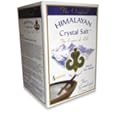
Since we’re pretty sure our soil is not iodine-rich, we probably don’t get iodine in the butterfat in our goat milk. We use unrefined sea salt on a daily basis – most of the time in the form of a homemade seasoning salt that contains kelp. Don’t be scared; this is a great tasting seasoning salt. And the level of kelp could be increased more, as its presence is not detectable to anyone with tastebuds. 😉
Here are some unrefined salt options on Amazon.com: Himalayan Sea Salt, RealSalt, and Celtic Sea Salt.
How do you make sure you’re getting iodine, but not too much?
We only recommend products and services we wholeheartedly endorse. This post may contain special links through which we earn a small commission if you make a purchase (though your price is the same).


Wardee, thanks for posting this. We use RealSalt exclusively, but it took some time for my husband to “get it” about iodine…at least, I think he gets it now! 🙂 Your homemade seasoning salt recipe looks fab; I can’t wait to try it as I’ve been looking for a way to incorporate some seaweed into our diet that wouldn’t freak some people out, LOL. Thanks again!
.-= Jen Joyner´s last blog post… Traditional Food #2: Kefir =-.
A very timely post for me as just yesterday I was reading up about “sea vegetables” being super foods, rich in nutrients…I’m going to have to pick up some seaweed varieties to see how I can get creative!
If I’m shopping at Fred Meyer, I buy Tillamook butter, knowing how green the grass is there year-round, but now I’m glad that its location by the ocean makes it an even better choice!
I buy the Kerrygold butter from Ireland when I’m at Trader Joe’s. I liked how yellow it was in the summer and fall.
I’ve been curious about Tillamook. It seems about as pale as cheapo butter…
This is really interesting! I did some additional quick research on this after reading the article and found that if your body is use to small amounts of iodine, it may have difficulty taking in additional iodine when you go to correct it. I’m wondering if the opposite is true if you’ve been taking in too much – ie: the SAD that has iodized salt all the time.
While I’ve been using sea salt for a long time, I had no idea that some of it is more refined than others. I will start checking this next time I make a purchase. Thanks for the great information!
I know this is off today’s subject, but I just discovered one more reason to buy locally when we can, and take our kefir and other probiotics every day.
http://green.yahoo.com/blog/the_conscious_consumer/124/how-clean-are-bagged-salads.html
Wardee~
When you feed your goats kelp for minerals, wouldn’t that supply their milk with more iodine for your family?
Thanks (as usual) for the great info!
~Christina
Wow, great post–I have been reading my NT (what a textbook!) and just read some other articles regarding iodine, and the dangers of synthetic preparations.
Thanks for the link to the salt post–don’t know if I need to bump that one, or can ask here (I’ll do the latter), but your salt in the crock doesn’t look cakey or lumpy at all. How do you manage that? We use a Celtic sea salt, but it’s so “wet” or oily, that I can’t imagine it having such an uncaked texture. Maybe you have a miracle recipe?
Can’t wait to try it–my kids will never knowingly eat kelp, and we’re pretty landlocked, so even our pastured butter is pretty wimpy. Our middle has been battling some depression, so if I can sneak some more healthy stuff into her diet, so much the better!
Dani – I use the Himalayan sea salt in that seasoning mix – it is dry. 🙂 Though it has less minerals over all than the Celtic (I read that somewhere), it is a good choice for a mix like this that needs to pour through a shaker.
Christina – I was wondering that myself! If they’re supposed to eat sea salt to be a good source of iodine, then why wouldn’t the kelp provide it?
Wardee, my mom worked for a doctor in New Zealand who had been up Mt. Everest with Sir Edmund Hilary, and his project there was to figure out the struggles those high mountain people had with not getting any iodine – natural or otherwise. They had some big problems with goiter issues and thyroid difficulties. Since that time, my mom has always purchased iodized salt based on his research…however, that was over 40 years ago, so I’m sure that a lot has been learned since then.
When my friend and a cousin had to go “iodine free” for three months due to thyroid cancer, they couldn’t eat any processed foods, even though most food companies don’t use iodized salt in their manufacturing process. This was so that the full body scans that were done, and the radiation granules that they took, would not absorb the iodine in their body and so that they could more accurately detect the levels of cancer and iodine still in their bodies. Very interesting.
.-= Julieanne Miller´s last blog post… Am I crazy to grind wheat berries with a coffee burr mill? =-.
My family has been using Real Salt exclusively for years…it’s delicious!…Americans eat way too much salt in the SAD diet as well as the Morton’s refined table salt…we also eat Kerrygold Irish butter which has a deep yellow color due to the high concentration of betacarotene found in the grass that the cows eat, which means we eat it, too!…love your posts, Wardee…keep ’em coming…I’m listening.
Holly – Yes, the Kerrygold butter! We use that, too – those cows are likely to be raised on iodine rich near-the-sea soil.
What about Nascent Iodine Supplments? Does anyone know how much is needed? or has anyone tried this?
Thanks Wardee for your blog!
There is a Holistic Dr. here who has written books on Iodine & Salt (unrefined sea salt) & thyroid function. These are essential reading materials for those who care about their health & diet. They are easy reads as well. Not too technical.
Dr. Brownstein speaks often for our WAP Chapter here in Southeastern MI.
In the books he mentions supplementing (if you’re not eating a proper nutrition filled diet) with either Lugol’s Solution or Iodoral tablets.
My husband recently became a patient of one of Brownstein’s partners & has started the Lugol’s. The taste is not marvelous. He makes an awful face when he drinks it down with water.
http://en.wikipedia.org/wiki/Lugol%27s_iodine
http://www.globalhealingcenter.com/iodine-deficiency.html
https://www.drbrownstein.com/homePage.php
Me, I’m looking forward to learning how to use seaweed & other more natural foods to improve my health.
If I keep printing all of Wardee’s wondering information I might be able to publish a boat load of books for her! LOL You should do a book Wardee.
SO MUCH TO LEARN. I thank God I found you Wardee! Thanks so much for being our teacher.
Dani,
For your wet Celtic Sea Salt – I’ve been told (and I do it) to lay the salt out flat on a plate or tray overnight to let it dry out. I’ve actually let it sit out for 3 nights to try to get it to dry out.
I still can’t put it into a regular salt shaker after grinding it … it just won’t shake out. So I’ve started buying it in the plastic bottle shaker they sell – most health food stores have it on their shelves.
If you’re buying the clumped stuff the best grinder I’ve found is this one:
http://www.celticseasalt.com/Kyocera_Ceramic_Fine_Grinder__P792C95.cfm
I have another “professional” grinder, but I don’t think it’s a ceramic grinder – it may be stainless steel or plastic & it just doesn’t grind as well… I may have gunked it up prior to realizing you had to dry out the wet salts. :o(
Hi Wardee,
I am rather new to your postings but I sure am enjoying reading and learning from them. Thank you for sharing and for all of the time you must take to do this.
I just wanted to say that my food thought for several years has also been to eat food as close to the way God made it as possible. Why do we humans always think we can improve on what God has given us? Besides which, food the way He gives it to us tastes good and is good for nourishing our bodies!!
I absolutely love the video of your happy goats!!
God bless,
Dawn
This may be a missplaced question/comment, but the best forum page I found on minerals so far. I’ve been using azomite powder for the last several years on the advice of wapf, but silly me feels odd not completely knowing what’s in it. Does anyone out there have some numbers on the concentrations of minerals it contains? I worry about getting too much, when added to my raw daily multi. Thanks so much! 😉
Kirsten — I don’t know, and wish I did. 🙂 Can you contact the company that provides the azomite powder to see what they say about the concentrations of minerals?